Go See the World — the Real One: How to Bypass Ultra-Processed Tourism and Find the Beating Heart of Culture
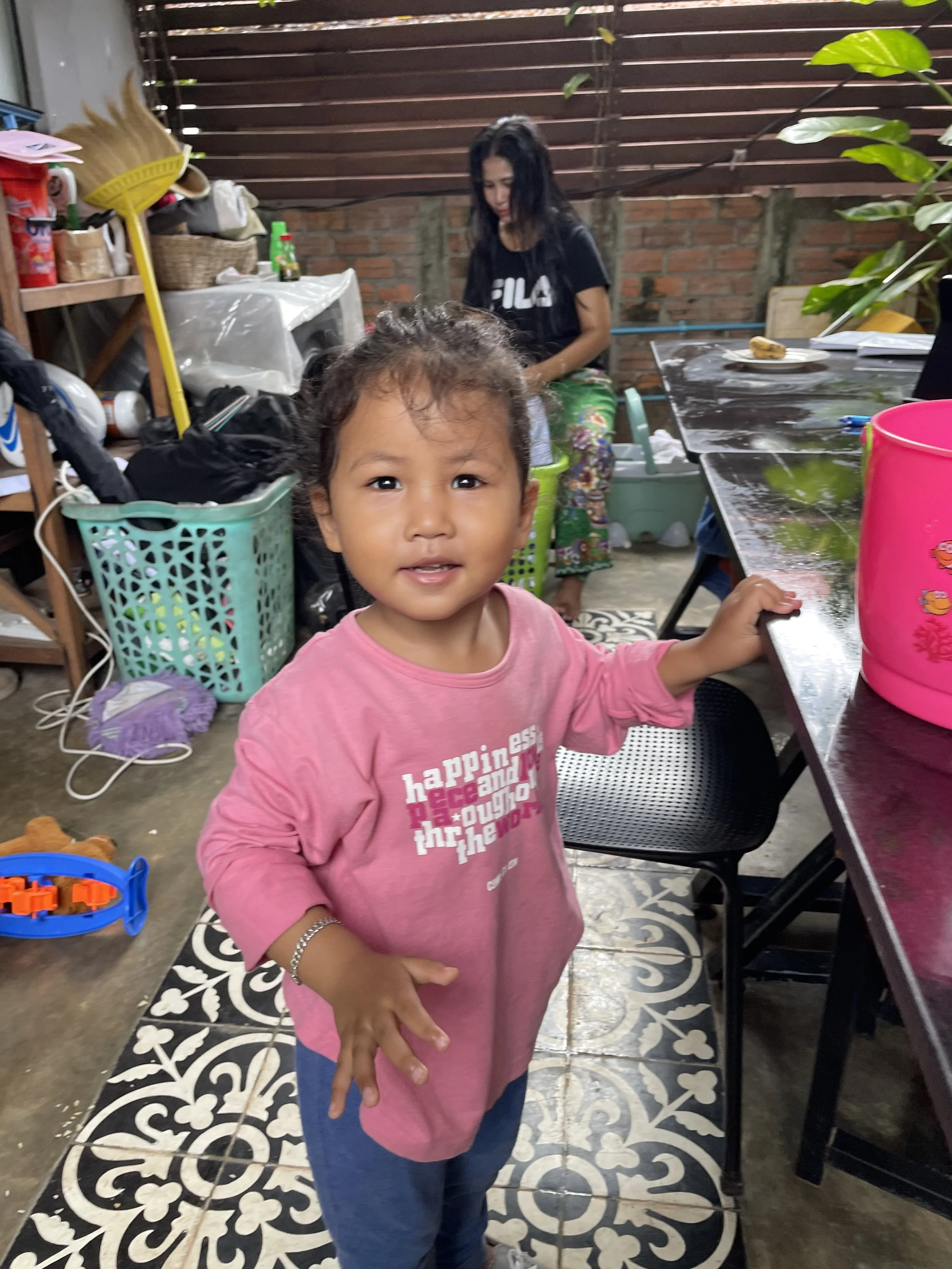
Maria, boss grrl of a homestay in Siem Reap, Cambodia. October 2025 Credit: Carol Emert
GLOBAL TOURISM HAS BECOME THE CULTURAL EQUIVALENT OF CHEEZ WHIZ: Fluffy, manufactured ingredients that leave the consumer hungry for the real deal.
On a recent six-month trip across Asia, my goal was to macerate in culture, spend quality time with local people, and come away with a clear, felt sense of each place. Across 11 countries*, I was bummed to learn that almost everything I wanted to do had been packaged into cultural Cheez Whiz.
It could be difficult to find even basic information for, say, visiting a museum the old-fashioned way - by walking in, buying a ticket, and looking around. Search results were dominated by packages promising to rush you through multiple sites, force-feed you a mediocre buffet lunch, and guarantee the company of people just like yourself. (Also, inevitably: Germans.)
AGI tools like ChatGPT and MindTrip proved useful for high-level itinerary building, but like regular search, they recommend the well-worn path by definition.
Here are my top strategies for piercing the armor of the tourism industrial complex:
Live with Locals
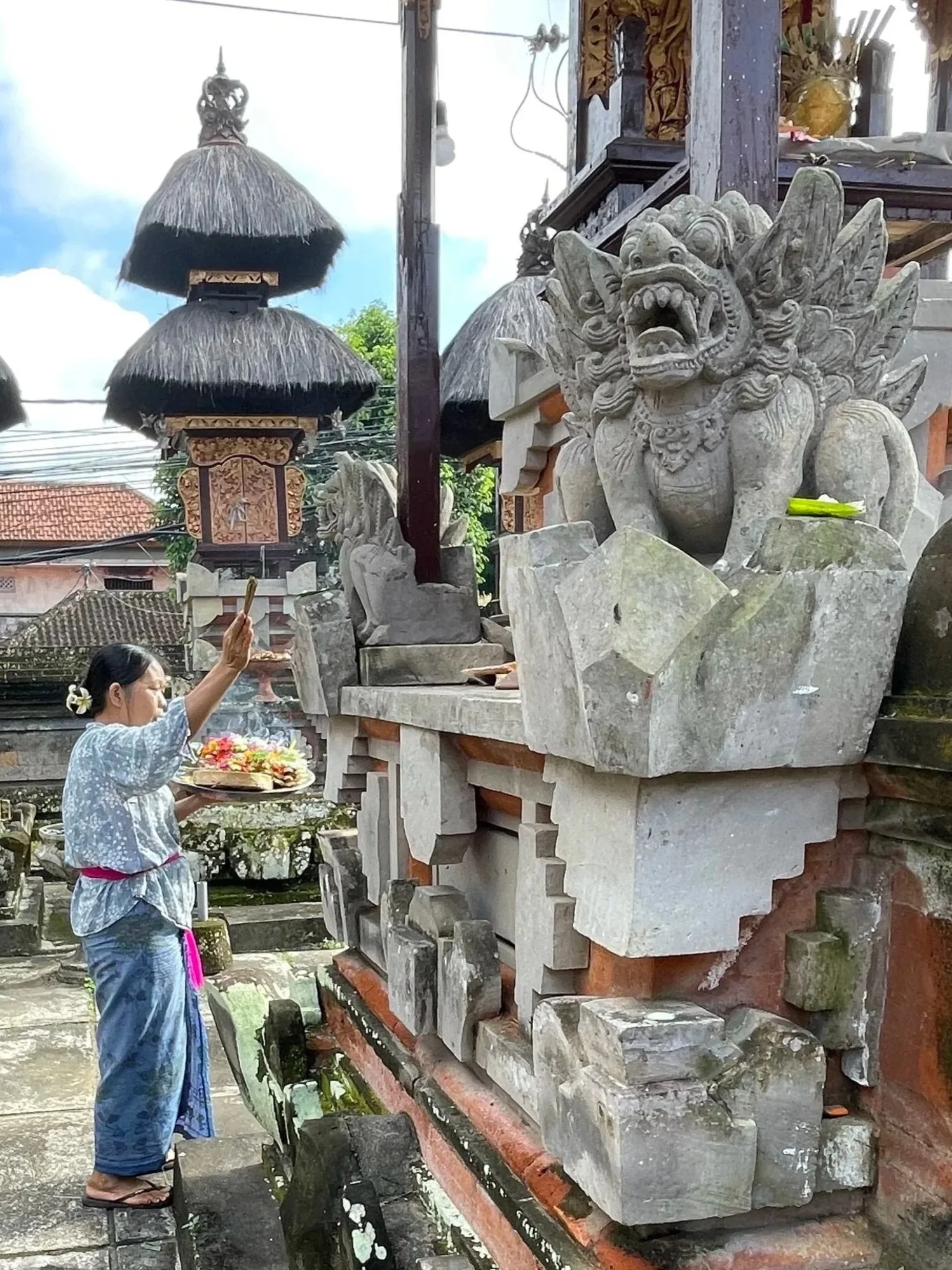
Airbnb hostess Lasti performing morning prayers in the family temple. She rescued me from chokingly touristy “Bali Disneyland”. September 2025. Credit: Carol Emert
Living with locals is far and away the best strategy for travelers to get under the hood of the local culture.
I enjoyed delightful homestays with families in almost every country I visited. I played “restaurant” with Maria, the cutest, bossiest toddler ever, in Siem Reap, Cambodia; hung out with competitive mahjong players in Penang, Malaysia; and made candles out of local plants with farmers in Tado-Pusut, Indonesia.
Homestay hosts invited me to parties, gave me rides, and engaged in long conversations about family, farming, religion, politics, gender roles, the arts – you name it. Our connections lasted only a few days, but were nevertheless sweet and authentic. These homestays made the difference between a good six months of travel and a deeply rewarding six months of travel.
Bali is a great case in point. Despite a choking level of tourism, it was one of my favorite places in Asia, for one reason only: a soft-spoken, partially blind, observant Hindu woman named Lasti who is also an Airbnb host. Lasti welcomed me to her morning prayers and gave me deep insight into Balinese Hinduism. She took me shopping at a vibrant morning market with no tourists in sight. And we bonded over many deep conversations about our lives and beliefs.
In just two weeks, my friend Lasti really changed me. I can’t say that about a single hotel stay ever.
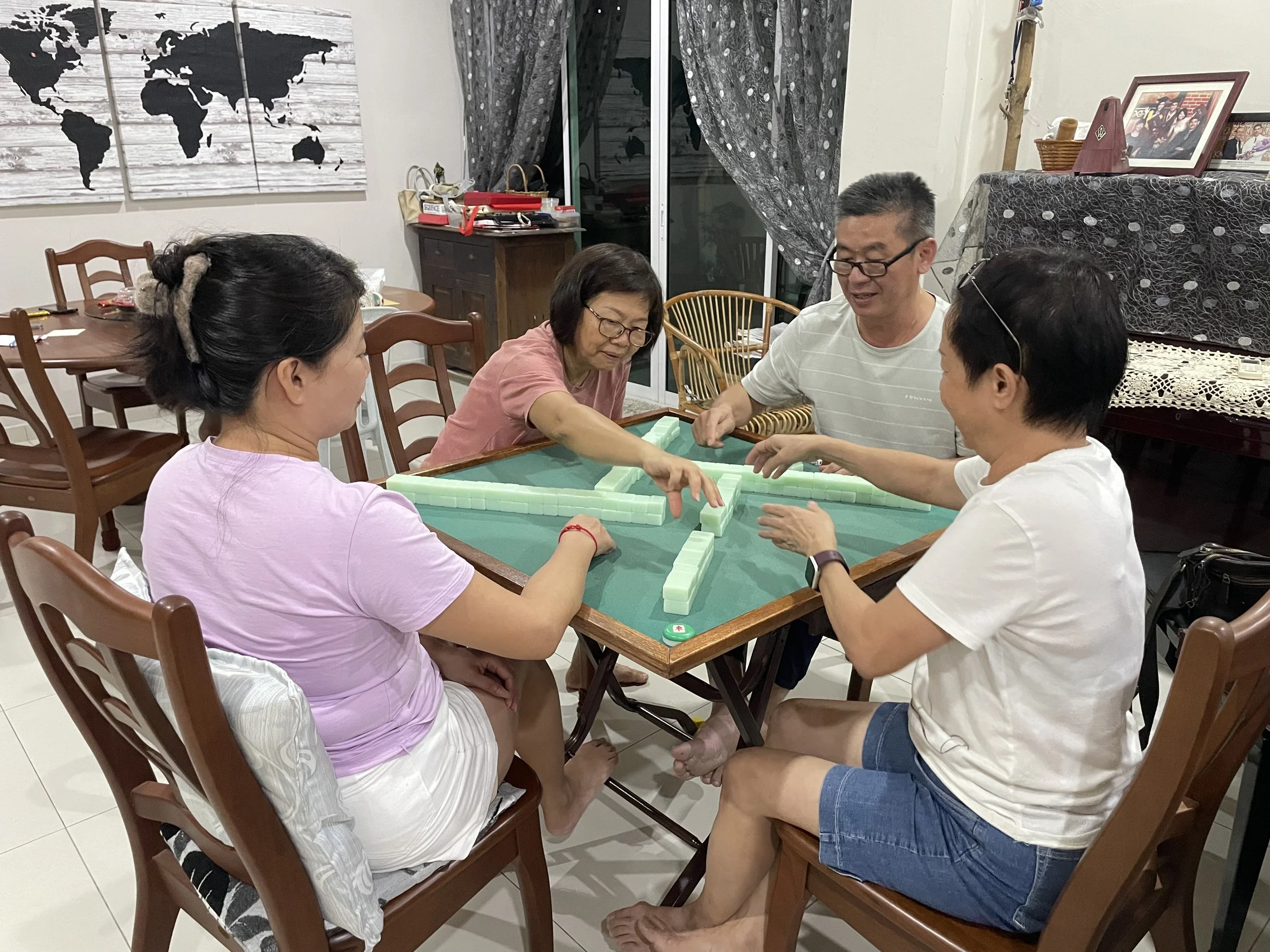
My hosts in Penang, Malaysia, part of the ethnic Chinese majority, are serious mahjong players. They gave me rides, treated me to dim sum, and educated me about Chinese Mahayana Buddhism. Credit: Carol Emert
2. Seek Indigenous Experiences
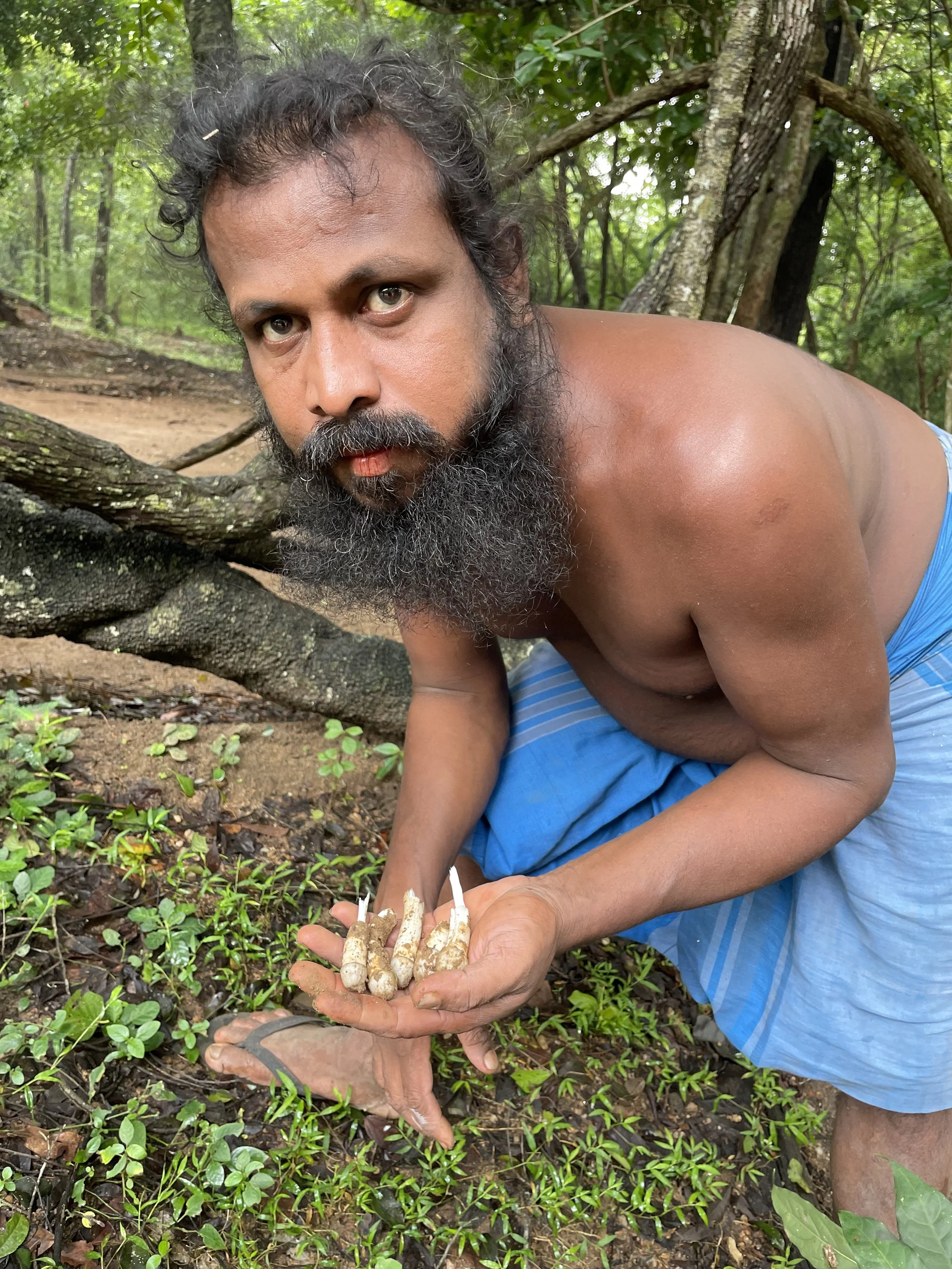
A Vedda man foraging for mushrooms that we later enjoyed in a stew. The Vedda may be the only people I’ve met who don’t seem conditioned to smile for the camera. December 2025. Credit: Carol Emert
Original peoples are, by definition, keepers of cultural authenticity – even as modernity inevitably edges in. Visiting indigenous clans was the best way I found to tap into rich veins of culture outside the mainstream.
Of all of the clans I visited, the Vedda of central Sri Lanka have maintained a way of life that is least changed by modernity. They are direct descendants of Neolithic people, pre-dating the conflict-ridden Sinhalese and Tamils, and remained isolated from outside influence until the 1980s. Their leader, Uruwarige Vannila Attho, the chief and medicine man, is now recognized globally for his work on issues of indigenous rights.
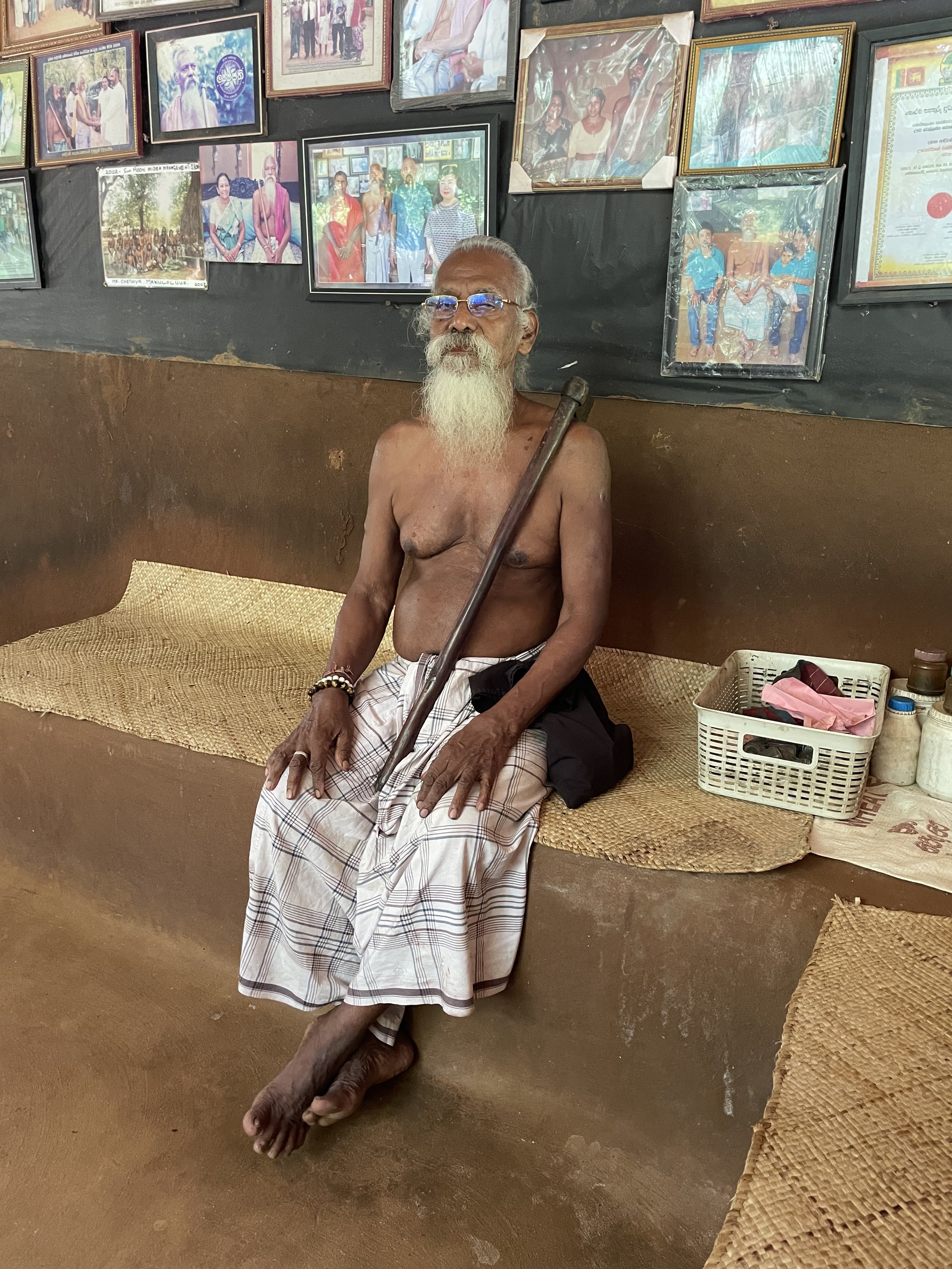
Uruwarige Vannila Attho is a globally respected leader on indigenous rights. I interviewed him in December 2025 in Dambala, Sri Lanka. Credit: Carol Emert
In 1983, the Sri Lankan government converted the Vedda’s homeland into a national park, circumscribing their hunting and foraging area so they could no longer feed themselves from nature. They were forced to supplement their livelihoods through farming and the cultural tourism that I enjoyed for a day. Girls and boys are required to attend a conventional public school, after which some choose to remain in the village while others opt for university or a mainsteam livelihood. They may re-settle in the village if they marry a Vedda, but not if they marry an outsider.
I asked Uruwarige Vannila Attho, as the medicine man, whether people are healthier or less healthy than they were before modern medicine came to the Vedda. He told me that the medicines from the forest had served the Vedda well, but that now they are challenged by diseases from the outside.
I learned later that his wife had died from COVID-19, which she of course would never have contracted if the Sri Lankan government hadn’t forced modernization on the Vedda.
Over the course of a day with the Vedda, I foraged, grated raw coconut, cooked, gathered honey, chewed betel nut (that’s actually a modern habit),and enjoyed re-enactments of a hunting ritual and a PG-rated honeymoon ritual (see photo below). Our hotel provided an interpreter since none of the Vedda speak English, nor even much Sinhala. Vedda remains a language with no written form.
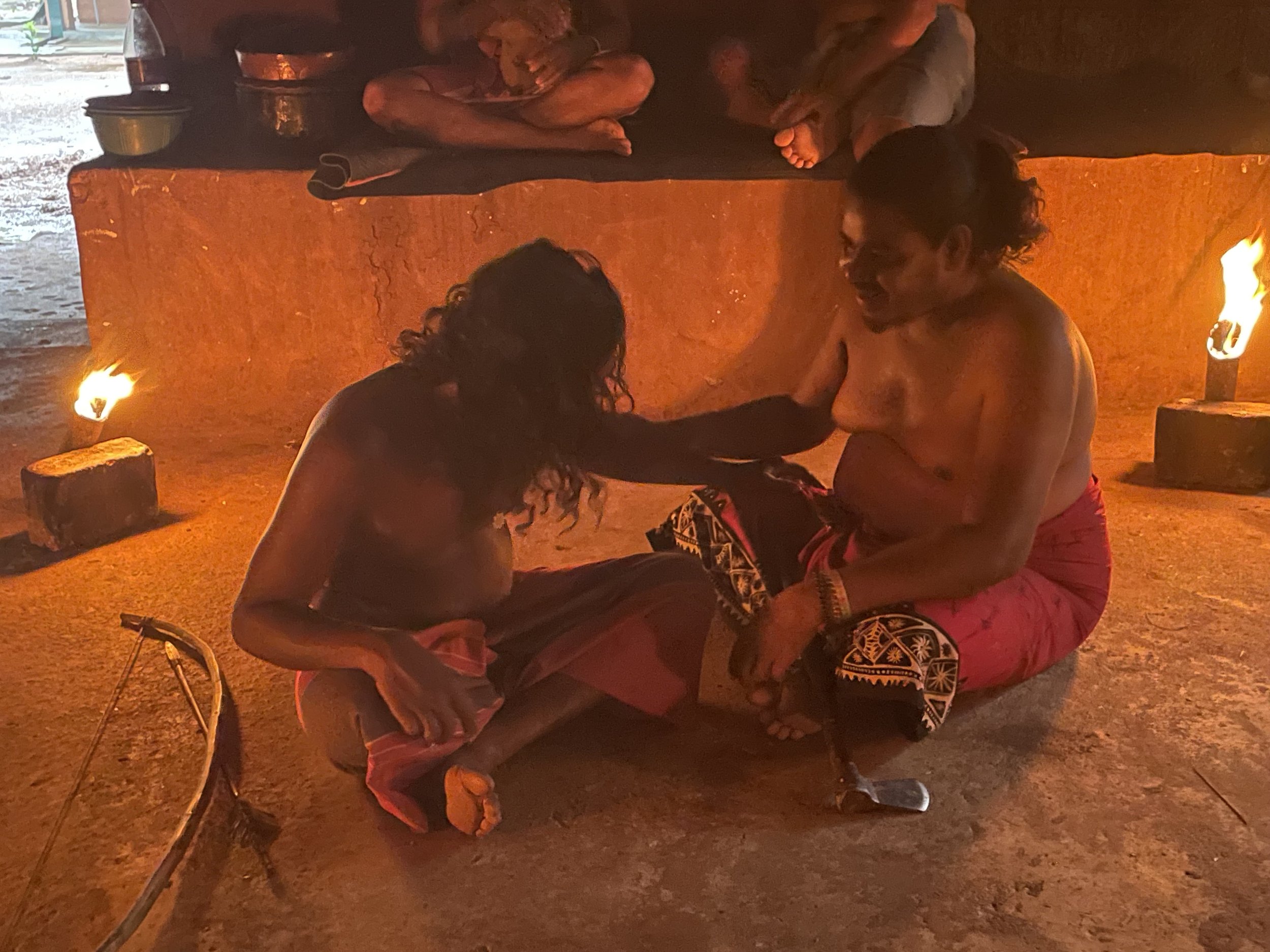
The Vedda performed ritual dances such as a honeymoon reenactment. Light petting and much laughter ensued. December 2015. Credit: Carol Emert
I found the Vedda people just like other people — by turns serious and funny, welcoming, dignified. They lack certain Western conditioning, like smiling for the camera, which I appreciated. I didn’t see a single Vedda woman, who appear to be confined to the huts when a visitor is about. It was unsettling to feel locked out of contact with my sisters. But all in all, my day with the Vedda was extraordinary, shedding light onto both pre-history and timeless humanness.
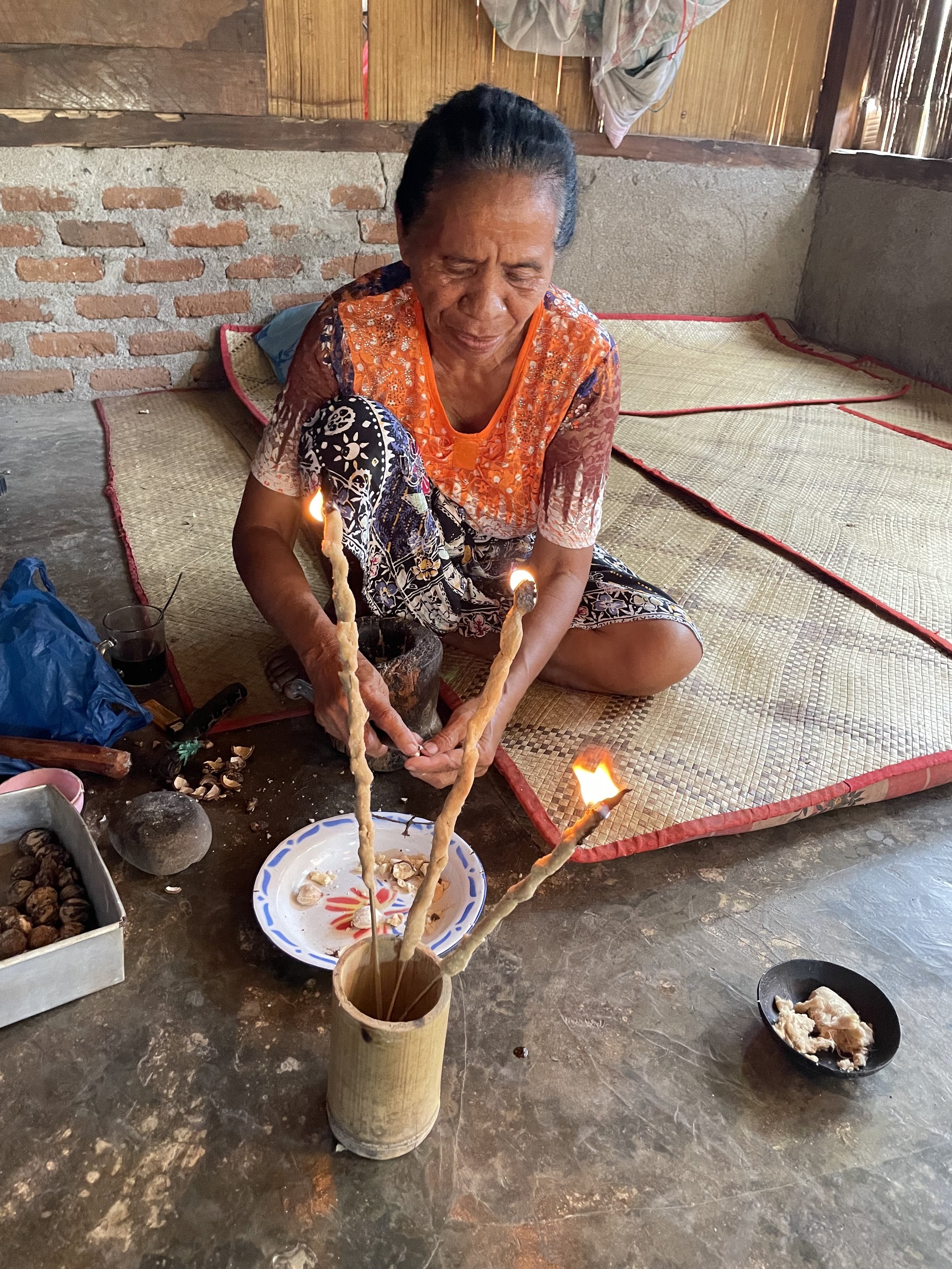
A Manggarai woman in Tado-Pusut, Flores, Indonesia, makes candles from oily candle nuts and kapok “cotton”. The floor mats are also crafted by hand from foraged fibers. Credit: Carol Emert
The other indigenous clans I visited in Asia — all of them wonderful — are the Ifugao in northern Luzon, Philippines; the Batak of Samosir Island and Tangkahan in northern Sumatra; the Manggarai of Tado-Pusut, Flores, Indonesia; the Bidayah and Penan of Sarawak, Borneo; the Hmong, Tai, and Khmu of Luang Prabang, Laos.
3. Connect with Other Culture Seekers
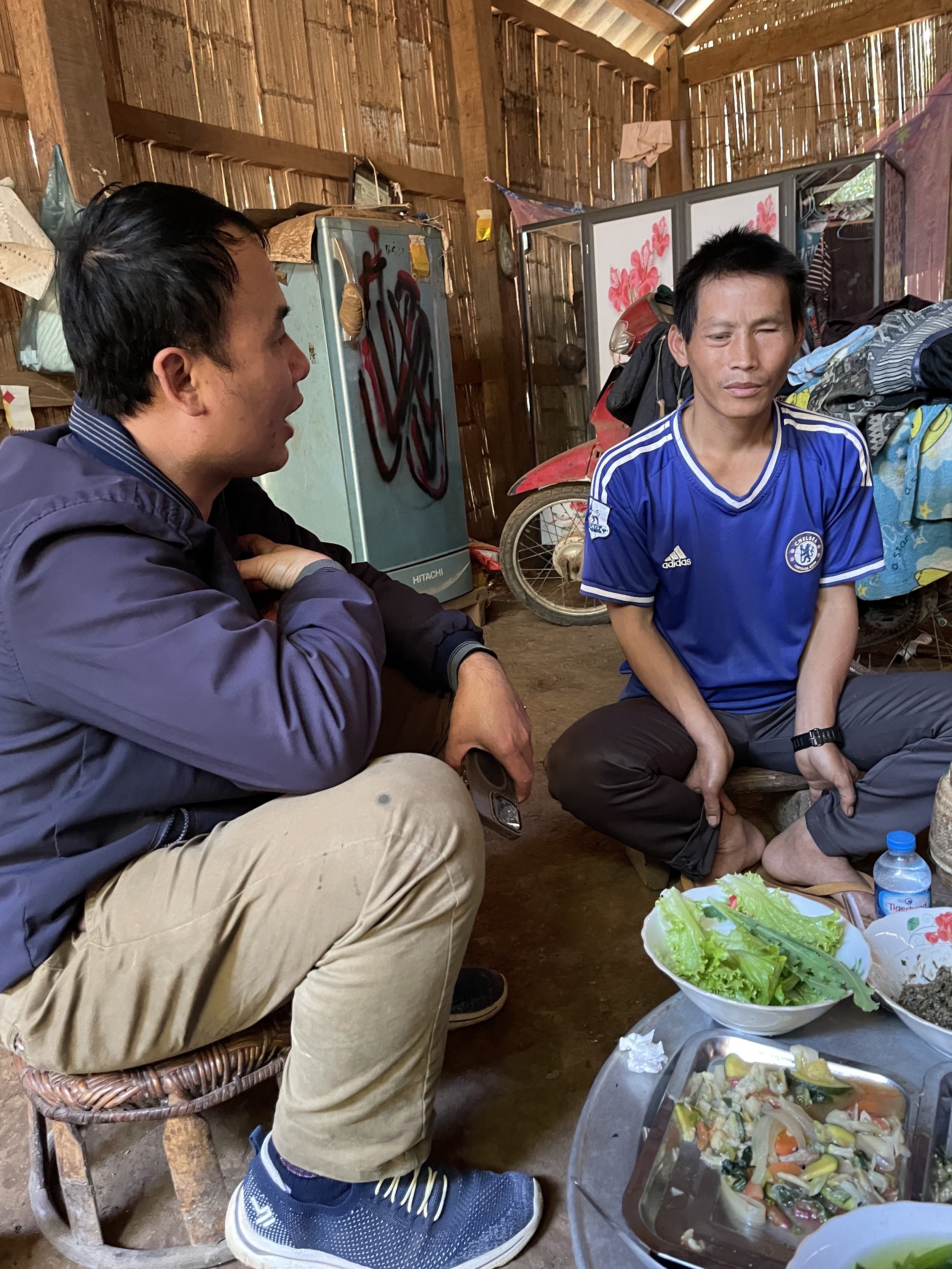
Phaeng, a guide in Luang Prabang, Laos, set up lunch with this indigenous rubber farmer, who served tree porcupine and opium poppy salad. January 2026 Credit: Carol Emert
Mainstream tourists rely on top search results; cultural tourists rely on word of mouth.
Rather late in my travels, I discovered country-specific FaceBook pages where off-the-beaten-track types trade advice. I was frustrated by the unpierce-able packagedness of Luang Prabang, Laos, where every travel company shuffled people through the same over-run indigenous village located conveniently on the way to the big-draw waterfall.
On a Laos FB page, I found Phaeng, a highly knowledgeable, articulate driver who took me to three villages of Hmong, Khmu and Tai people. It was a day of adventure: tree porcupine for lunch, gangs of village kids to hang out with, and a chance encounter with a man weaving a stool in his yard from foraged rattan.
Private drivers are terrific sources of local insight and don’t always cost more than packaged tours. Conversations can go deep when you’re spending many hours with a person: How are U.S. tariffs affecting you and your community? What does it mean as a practical matter that Laos (or Vietnam) is communist? In Sri Lanka, how does Buddhist faith centered on ego non-attachment jibe with anti-Muslim bias?
My driver in Siem Reap, Mara Chay, became a friend and took me to his family farm for the day. He showed me how to climb a coconut tree without a ladder (key tools: bare feet and spit) and his family served catfish from the rice paddies. Neighborhood children around came to say hello in English and sit on my lap.
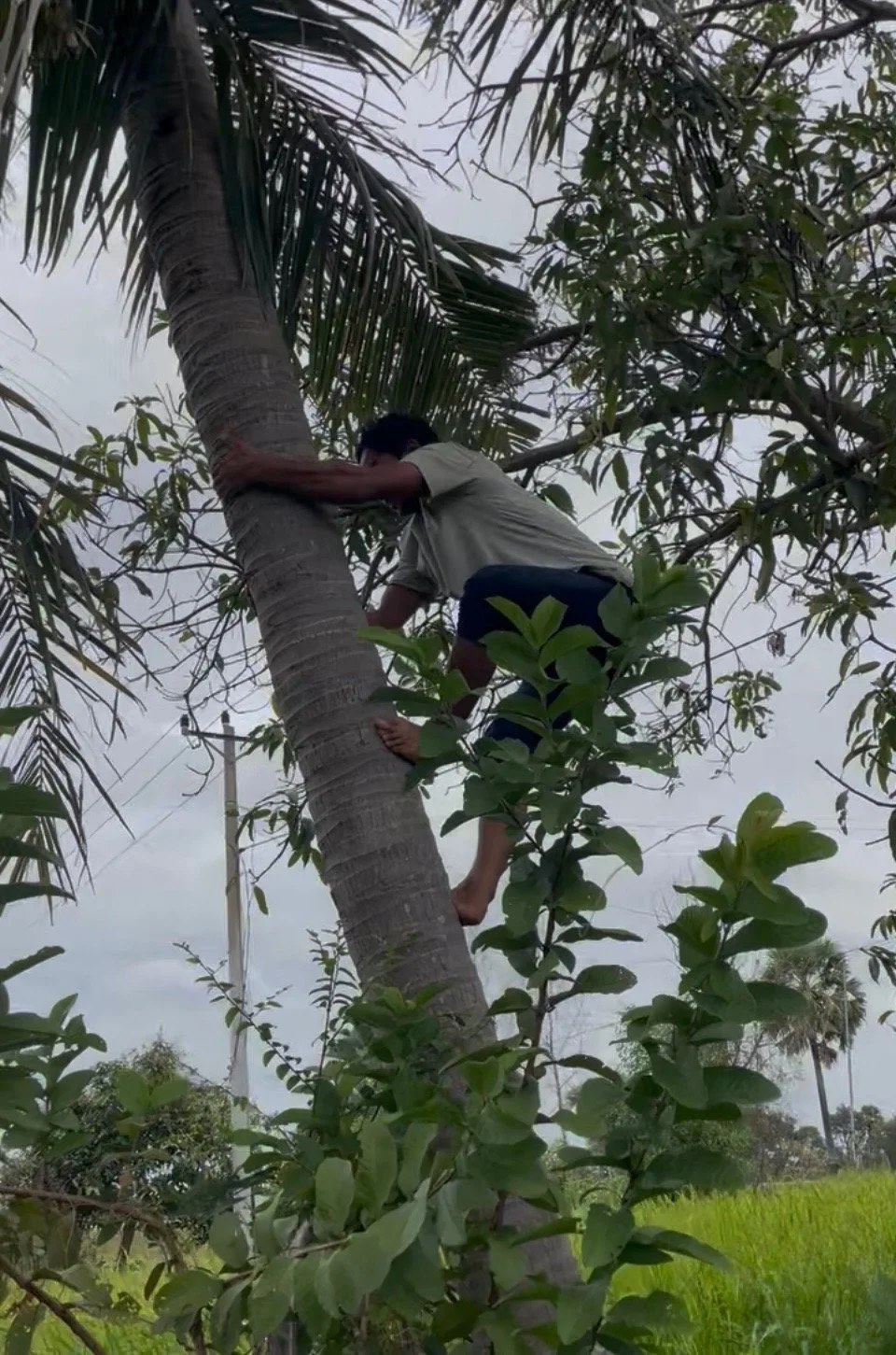
Mara demonstrated his climbing skills to pick me a coconut in Siem Reap, Cambodia. November 2025. Credit: Carol Emert
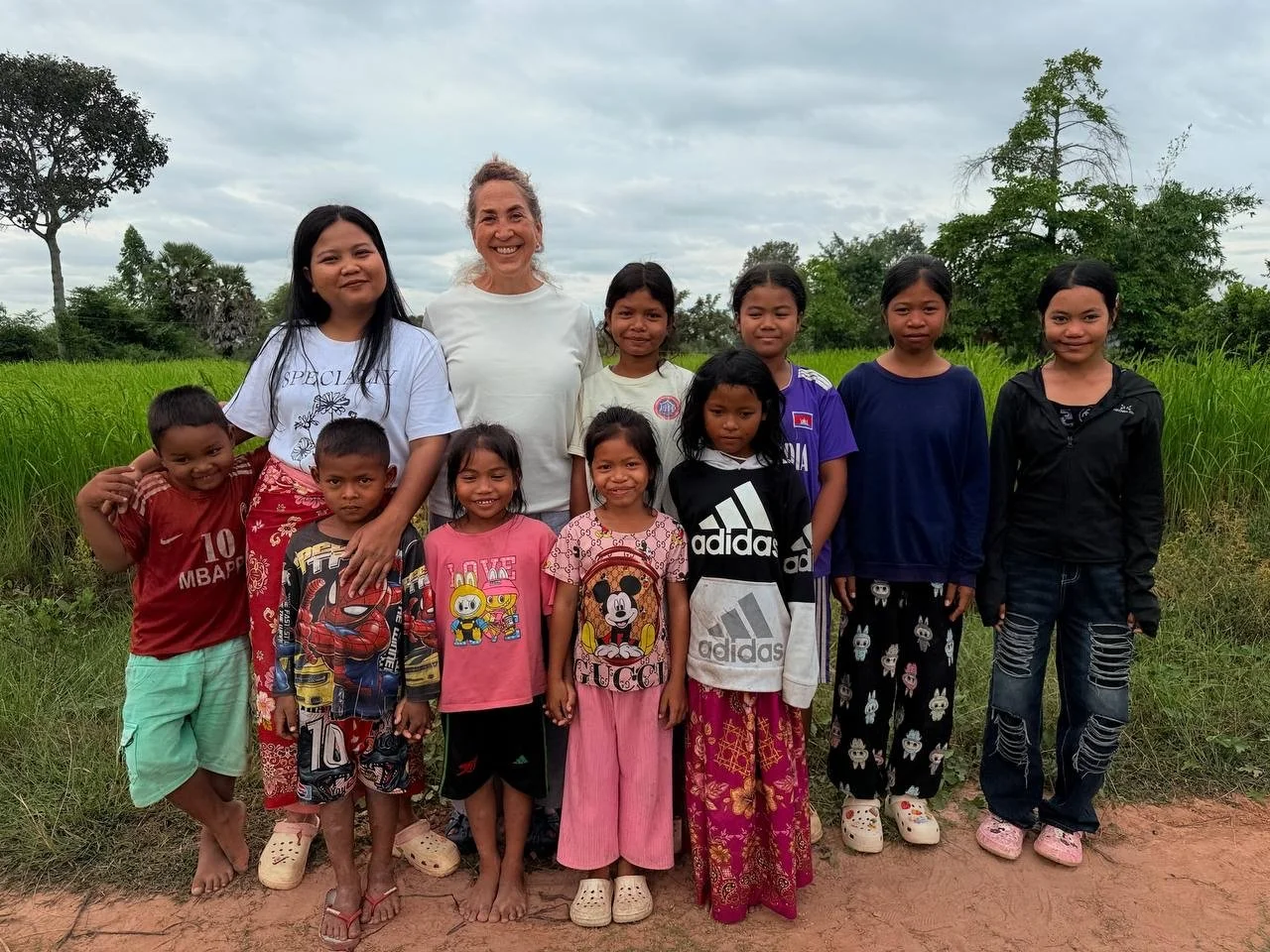
A special day on the family farm of my friend and guide, Mara, in Siem Reap, Cambodia. He, his wife, and the local children gave me a tour of the rice paddies. November 2025 Credit: Marada Chay
So there you have it – the travel tips that brought my six months in Asia to life. Now go see the world – the real one. Happy adventuring.
*The places I visited, in chronological order: Japan, Philippines, Indonesia (Bali, Flores, Komodo, Java, Sumatra), Malaysia (Peninsula and the Bornean states of Sabah and Sarawak) Singapore, Cambodia, Thailand, Sri Lanka, Laos, Vietnam, Hong Kong.